




How to Select an Exhaust Fan (Negative Pressure Fan) for Industrial and Agricultural Applications
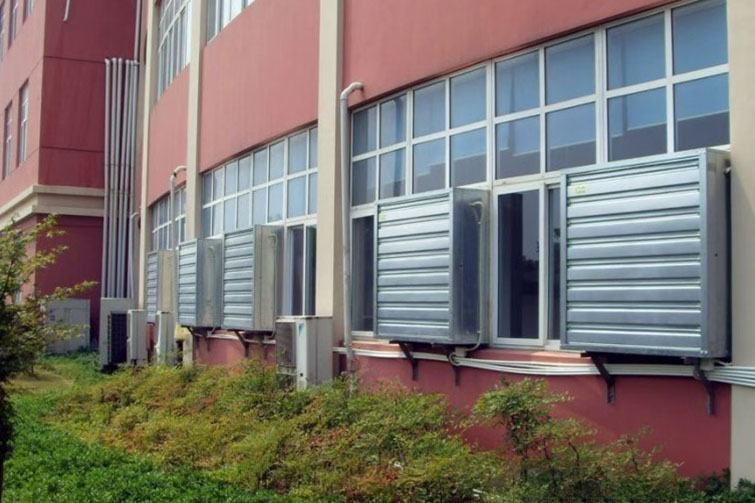
Negative pressure exhaust fans have become a cornerstone of effective ventilation in industrial workshops, agricultural buildings, warehouses, and large commercial spaces. By creating a deliberate negative pressure differential inside a building, these powerful fans expel hot, stale, and polluted air, allowing cooler, fresh air to be drawn in through strategically placed openings. This process, known as cross-ventilation or tunnel ventilation, provides cooling and air exchange without the high energy cost of traditional air conditioning. Selecting the right fan is critical for performance and efficiency.
1. Core Principles: How Negative Pressure Ventilation Works
Before selection, understand the goal: to achieve complete air exchange. The fan creates a pressure drop (negative pressure) inside the building. This pressure difference pulls air uniformly through all building inlets (e.g., doors, windows, or specially designed dampers), creating a steady, cooling breeze across the entire space. Properly designed, the system removes heat, fumes, dust, and humidity directly at the source.
2. Key Selection Criteria: A Step-by-Step Guide
Step 1: Calculate the Required Airflow (CFM/CMM)
This is the most critical calculation. Undersized fans are ineffective; oversized fans waste energy and can create excessive, turbulent drafts.
- Primary Formula: Air Changes Per Hour (ACH)Required Total Airflow (CFM) = (Building Volume (cubic feet) × Desired Air Changes Per Hour) / 60Required Total Airflow (CMM) = (Building Volume (cubic meters) × Desired Air Changes Per Hour) / 60Building Volume: Length × Width × Average Eave Height. For high-peaked roofs, use an average of sidewall and peak height.Air Change Rate (ACH):General Industrial Workshops: 30-45 ACH (for heat/fume removal)Welding or Fume-Heavy Areas: 40-60+ ACHAgricultural (Poultry/Livestock): 60-90+ ACH (for animal cooling)Warehouses (for ventilation only): 10-20 ACH
- Example: A 30m (L) x 20m (W) x 6m (H) factory = 3,600 m³. For 40 ACH: (3,600 × 40) / 60 = 2,400 CMM total required.
Step 2: Determine Fan Size (Diameter) and Quantity
The total airflow calculated must be delivered by one or more fans.
- Match Fan to Wall Space: Fan diameter determines its airflow capacity. Larger diameters move more air at lower speeds (and noise). Common sizes: 500mm (20"), 750mm (30"), 900mm (36"), 1200mm (48"), 1400mm (54").
- Consult Manufacturer CFM/CMM Charts: Always use the published performance data for specific models at different static pressure levels (see Step 3).
- Distribution Strategy: It's often better to use multiple, smaller fans distributed along a wall than one giant fan. This ensures even negative pressure distribution and provides redundancy. Divide the total required airflow by the CFM of a selected fan model to determine quantity.
Step 3: Account for Static Pressure (System Resistance)
Fan performance degrades as resistance increases. Static pressure (measured in Pascals, Pa) is the resistance to airflow caused by:
- Inlet Restrictions: Screens, bird guards, louvered dampers.
- Ductwork (if used, though uncommon for basic exhaust).
- Building Obstructions: Dense equipment, partitions.
- Air Inlet Size: Crucial! The total free area of air inlets must be 1.2 to 1.5 times the total fan discharge area. Inadequate inlet area is the #1 cause of poor performance.
Selection Tip: Choose a fan whose performance chart shows it can deliver your required CFM at the expected static pressure (typically 10-30 Pa for a well-designed open-wall system).
Step 4: Evaluate Fan Type and Key Features
- Propeller Type:Aluminum/Alloy Blades: Standard for most industrial applications. Good efficiency and durability.Fiberglass Reinforced Plastic (FRP) Blades: Essential for corrosive environments (chemical fumes, high humidity, coastal areas). Rust-proof.
- Shutter Design:Automatic Gravity Shutters: Close when fan is off to prevent backdrafts and pest entry. Ensure they operate freely.
- Motor & Drive:Direct Drive: Motor connected directly to the blade. Quieter, more efficient, less maintenance. Preferred for most applications.Belt Drive: Motor off to the side, driving the blade via belts and pulleys. Allows for speed adjustment (by changing pulley size) but requires belt maintenance.Motor Rating: Look for Totally Enclosed (TEFC) or Thermally Protected motors rated for continuous duty. Check IP (Ingress Protection) rating for dust/water resistance (e.g., IP55).
- Frame & Construction:Galvanized steel frame is standard. Powder-coated or stainless steel offers better corrosion resistance.
- Energy Efficiency:Look for high Airflow Efficiency (CFM/Watt). An efficient 54" fan may move 20,000 CFM for <1 kW, while an old model might use 1.5 kW.
Step 5: Assess Quality and Control
- Build Quality: Check blade balance, shutter seal, and welding quality. A sturdy, vibration-free fan will last longer.
- Controls: Basic on/off switch vs. variable speed controllers (using frequency inverters). Variable speed is highly recommended to match ventilation rate to actual conditions (temperature, humidity), saving significant energy.
- Safety: Ensure all moving parts are properly guarded. Motor thermal overload protection is a must.
3. Practical Checklist for Purchase
- Building Volume Calculated: _________ m³ / ft³
- Air Changes Per Hour Selected: _________ ACH (based on use case)
- Total Required Airflow: _________ CMM / CFM
- Inlet Area Verified: Is it 1.2-1.5x the total fan area? Yes / No
- Fan Model & Quantity Selected: ______ x [Model] providing ______ CMM each at ____ Pa.
- Environment Suitability: Blade material (Aluminum/FRP) and motor protection (TEFC/IP rating) chosen for conditions.
- Control Strategy: Basic on/off or Variable Speed Drive planned.
- Installation Plan: Location ensures even air draw and safe operation.
4. Common Mistakes to Avoid
- Ignoring Inlet Area: Starving the fan of air is like choking an engine.
- Using "Peak" CFM Ratings: Select fans based on performance at a realistic operating static pressure, not the "free air" (0 Pa) rating.
- Poor Placement: Installing all fans on one wall without considering cross-flow, or placing them near obstructions that disrupt airflow.
- Neglecting Maintenance: Fans in dirty environments require regular cleaning of blades and shutters to maintain performance.
Conclusion
Selecting a negative pressure exhaust fan is an engineering decision based on quantifiable needs. By methodically calculating your airflow requirement, understanding static pressure, and choosing a robust, efficiently designed fan matched to your environment, you can create an effective ventilation system that dramatically improves air quality, reduces heat stress, and lowers operational costs compared to refrigerated cooling. Remember, the system is only as strong as its weakest link—proper sizing, adequate inlet area, and correct installation are all paramount to success.